
Read the Trends, Then Make Them Your Own
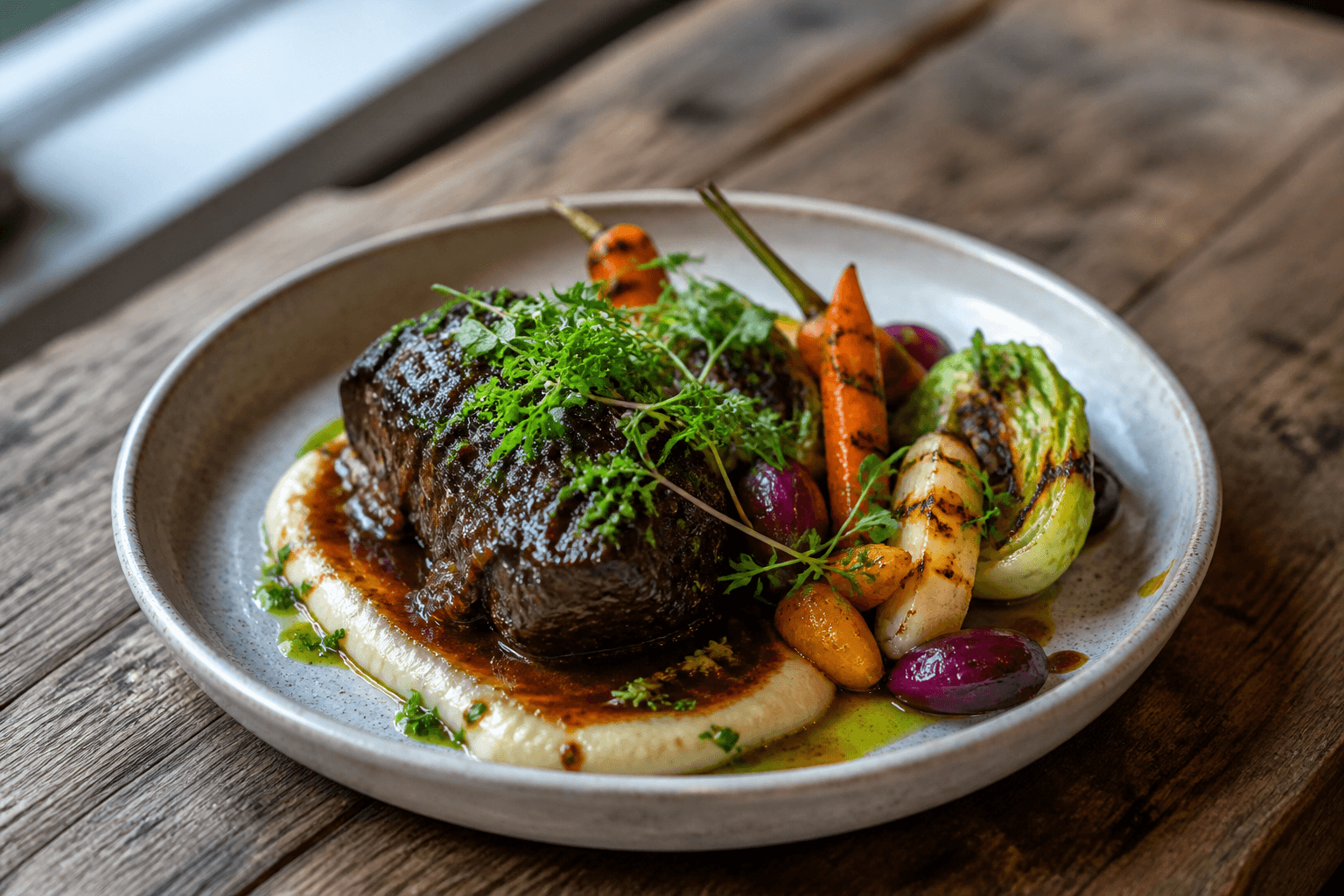
Recent competition-style menus often lean on British ingredients with global techniques. Think slow-braised beef on buttery mash, pork belly rice bowls with pickles, smoked beef with grains and chutney, lamb pilaf with cumin, or fried chicken with punchy sauces.
The lesson is not “add fusion dishes for the sake of it”. The stronger approach is:
- Start with a dish your team can execute consistently.
- Add one memorable flavour hook, such as a house sauce, pickle, spice blend, smoke element, or texture contrast.
- Keep the menu description short enough for a queueing customer to understand quickly.
- Make sure the dish still travels well in takeaway packaging.
A strong street-food dish should be exciting, but it also has to survive a busy service.
Build Plant-Based Dishes Properly
Plant-based options are now part of mainstream menu planning. The best ones are not afterthoughts. A vegan or vegetarian dish should have the same level of care as your meat-led bestseller: depth, protein, texture, acidity, and a satisfying finish.
Useful directions include:
- A mushroom-led dish with smoke, herbs, and a rich base.
- Tofu or vegetable skewers with a glaze and fresh garnish.
- A plant-based “steak” or patty only if it fits your brand and can be cooked reliably.
- Grain bowls with pickles, sauces, crunch, and a clear protein element.
Avoid offering a stripped-back version of another dish if it leaves customers feeling they paid the same for less.
Use Local Ingredients Without Losing Speed
Local sourcing can strengthen your story and improve quality, but it must work operationally. Before adding a local ingredient, check:
- Is supply reliable across your trading season?
- Can you prep it in batches?
- Does it increase waste or labour?
- Can staff explain it quickly?
- Does it improve the dish enough to justify the cost?
A local cheese, mushroom, cut of meat, chutney, bakery item, or seasonal vegetable can make a menu feel rooted in place. Just keep your gross margin and prep time under control.
Design for Queues, Not Just Photos
Competition menus often reward creativity, but real trading rewards throughput. A dish that takes too long to assemble can slow the whole unit.
Pressure-test new dishes by asking:
- Can one trained person plate it during peak service?
- How many hot components does it need?
- Can sauces and garnishes be portioned in advance?
- Does it require specialist equipment?
- Is the packaging sturdy, affordable, and easy to eat from?
If a dish looks great but creates bottlenecks, simplify it before launch.
Keep Compliance in the Recipe Process
Innovation should sit alongside food safety. When testing new dishes, update your allergen information, supplier records, and prep procedures at the same time.
Operators should review FSA allergen guidance and make sure their food business is properly registered with the relevant local council via gov.uk. Trade bodies such as NCASS can also provide practical support for mobile caterers.
Turn Feedback into Better Menu Decisions
Before committing to a new dish, trial it in a controlled way:
- Run it as a limited special.
- Ask customers what they would pay for it.
- Track prep time, waste, and sell-through.
- Note which menu wording works best.
- Compare its margin with existing bestsellers.
Customer praise is useful, but sales, speed, and profit decide whether a dish earns a permanent place.
The Takeaway for Operators
The biggest lesson from standout street-food menus is focus. Memorable dishes usually combine a clear idea, strong ingredients, disciplined prep, and confident seasoning. Use trends as inspiration, but build dishes around your own equipment, staff skills, margins, and customer base. That is where creativity becomes a viable business advantage.