
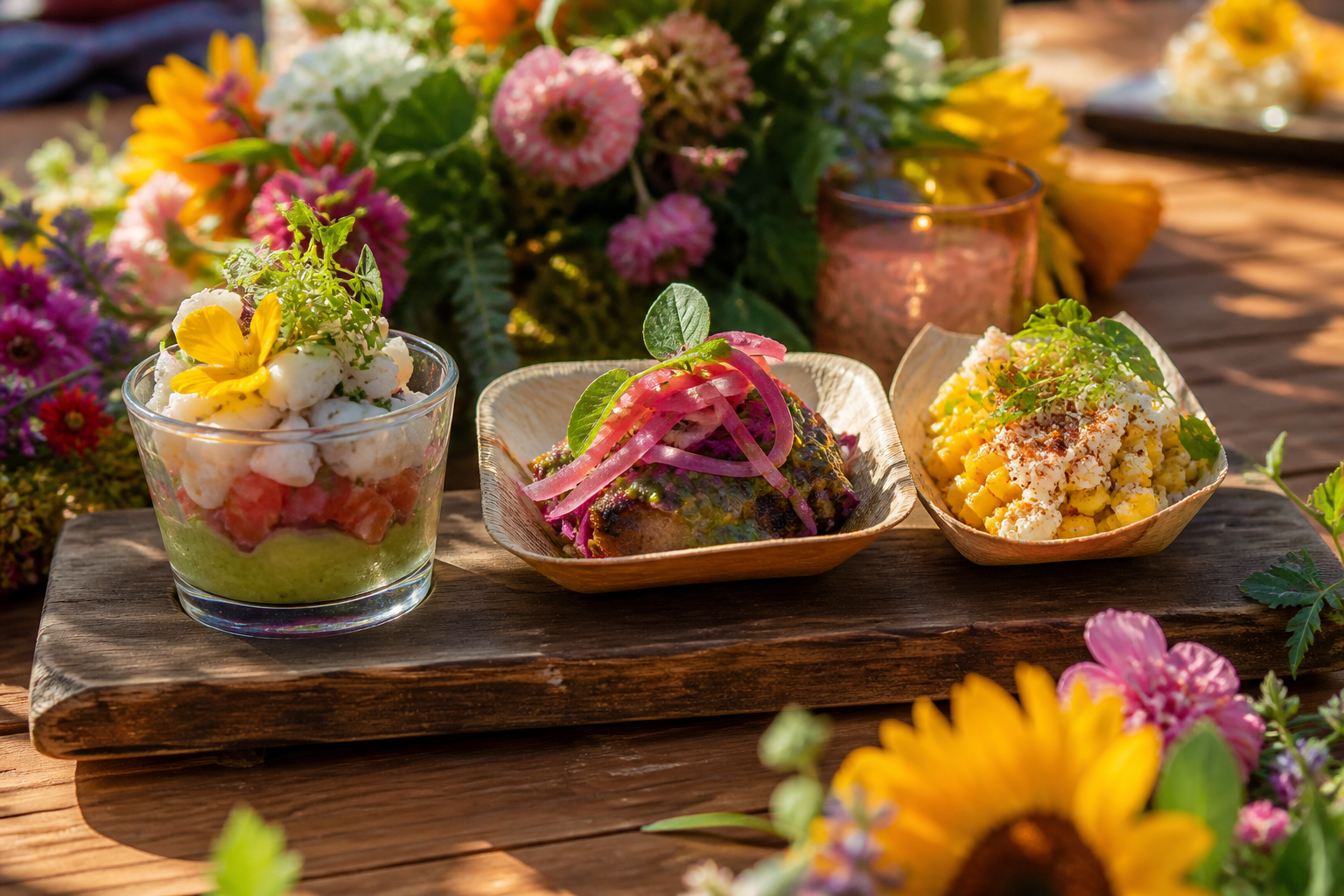
That matters right now. As the late summer festival and wedding calendar rolls on — with the school holidays winding down — customers are still looking for food that feels sociable, photogenic and easy to eat standing up. For mobile traders, a well-built mini-meal flight can be a useful bridge between a snack and a full main.
Why mini-meals work at busy events
Festival customers are often making several decisions at once: what looks good, what will travel back to the group, and whether they can justify another purchase later. A flight answers the first two questions neatly.
It also tackles a common mobile-food problem: the big meal bottleneck. A full loaded dish may need more assembly, more sauce and more eating time. Three smaller portions can use the same core ingredients while giving the order a more exciting name and presentation.
The important bit is control. A flight should not mean three completely different dishes, three cooking methods and a kitchen having a small nervous breakdown.
Build around:
- One shared base, such as fries, flatbread, rice, fried chicken, bao or roasted vegetables
- Two or three toppings, sauces or seasoning profiles
- A single portion size and packaging format
- Components that can be batch-prepped and finished quickly
For example, a “Three Ways” box could use one portion of fries divided into smoky brisket, curry-spiced cauliflower and garlic-herb halloumi. Same base, different finishes. The menu looks broad without requiring a small warehouse of ingredients.
Price the experience, not just the food
Mini portions can quietly destroy margins if you price them like samples. Customers are buying variety, but you are still paying for packaging, labour, sauces and the extra fiddling involved in three finishes.
Work backwards from your normal food-cost target, then add a clear premium for variety and presentation. A flight should generally sit above the price of a single small side and make sense beside your main meals.
A few practical rules:
- Use one box or tray, not three separate containers
- Keep the portions visibly generous enough to feel like a meal
- Offer one “safe” flavour, one signature flavour and one limited or punchy option
- Make the upgrade obvious: flight, drink and dip as a simple bundle
- Avoid too many choices at the till; choice is fun for the customer and slow for the queue
A useful test: if your team cannot explain the flight in one sentence while serving, it is probably too complicated.
Design for the queue, not Instagram
A flight needs to look good, but it must survive a windy field, a folding table and somebody carrying it with one hand. Keep wet sauces controlled, avoid toppings that collapse quickly, and separate anything crisp from anything likely to steam it soft.
Packaging should help staff portion consistently. Mark the compartments or use a fixed layout so every box is assembled the same way. That makes training easier and prevents the final customer of the day receiving the “creative interpretation”.
Allergen communication needs to be just as clear as with a full meal. If the three sections contain different allergens, make that visible on the menu and at the point of ordering. “Ask us” is not a substitute for having the information ready.
What to test this week
Before your next late-season pitch or wedding booking, trial one flight with your existing menu rather than inventing a new range.
- Pick three flavours using no more than one new ingredient.
- Time the full assembly from ticket to handover.
- Cost the box, including packaging, sauces and garnish.
- Ask three blunt questions: Was it filling? Was it easy to share? Would you buy it again?
- Set a hard daily limit if prep capacity is uncertain.
Put the flight near the top of your board, not buried under six paragraphs of menu copy. A short name, three flavour labels and one clear price will do more work than a poetic description.
The opportunity is not “smaller food”. It is a faster, more flexible way to sell a complete-feeling experience — particularly when customers are eating on the move and still browsing the next tent.