
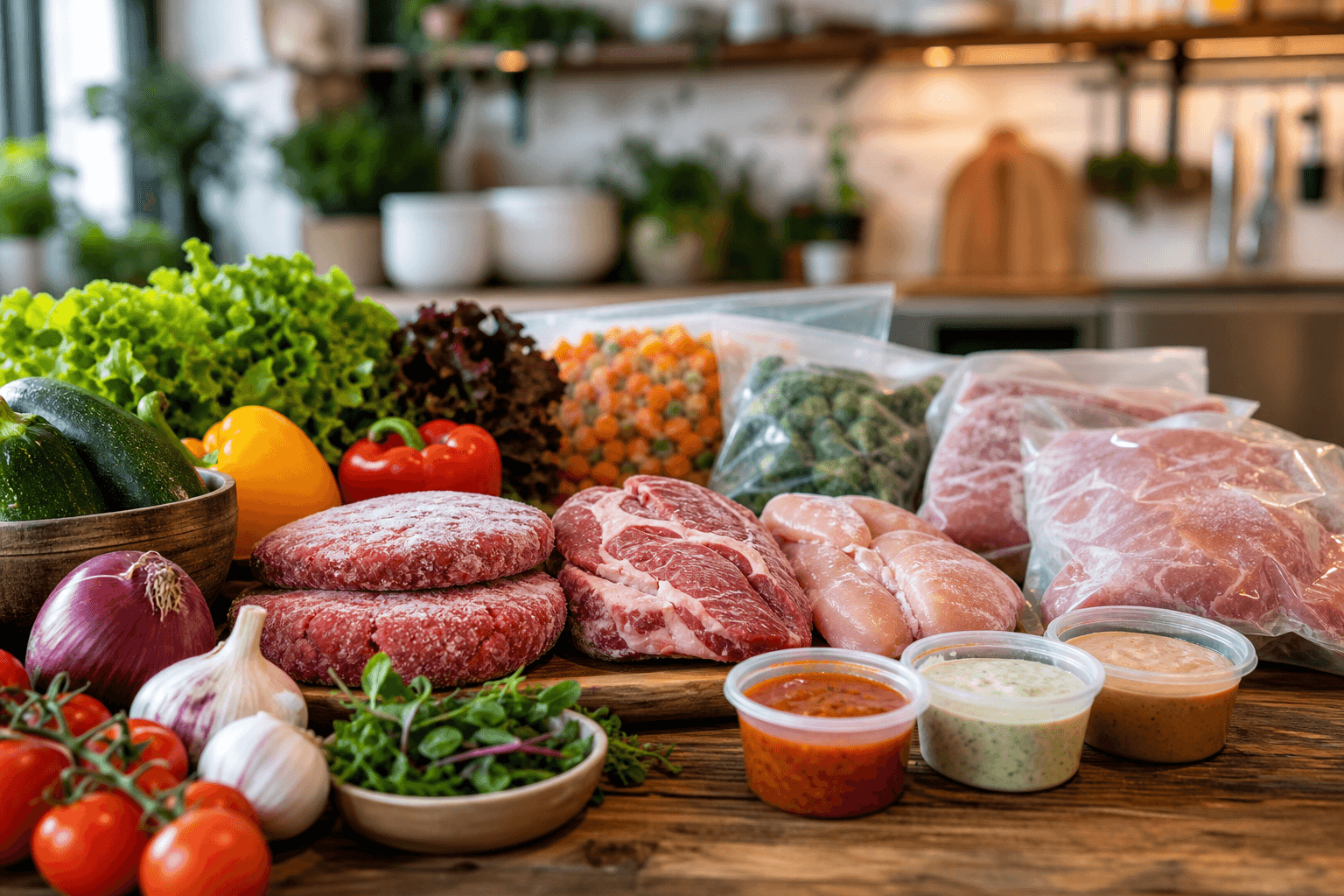
Consolidate Supply Without Losing Control
Managing too many suppliers can drain time and create admin errors. Start by mapping what you buy each week: fresh produce, frozen items, dry goods, meat, dairy, drinks, disposables and cleaning products. Then ask whether one or two reliable wholesalers could handle more of the routine order.
Before switching, compare:
- Delivery days, cut-off times and minimum order values
- Product quality and substitution rules
- Allergen information and traceability
- Invoice clarity and payment terms
- Emergency support if a delivery is missed
Consolidation should reduce admin, not make you dependent. Keep backup sources for your key ingredients, especially anything central to your signature dishes.
Build Menus Around Prep, Speed and Margin
Dark kitchens work well because menus are engineered for repeatability. Mobile operators can use the same principle without losing personality.
Look for ingredients that can appear across several dishes. For example, one well-made sauce, garnish or protein prep might support a main, a side and a special. This reduces waste and helps staff move faster during a rush.
When testing new menu ideas, consider:
- Can it be prepped safely in your available kitchen space?
- Does it hold well during service?
- Can one person assemble it under pressure?
- Does it still feel like your brand of street food?
- Is the margin strong after packaging, labour and waste?
Try specials in small batches before committing to a permanent menu change.
Choose Packaging That Protects the Food
Delivery and takeaway packaging is not just a cost line; it affects customer experience. Test packaging before buying in bulk. Hot fried food may need ventilation to prevent sogginess, while saucy dishes may need stronger seals. Keep sauces, garnishes and crisp toppings separate where needed.
Run a simple test: pack the dish, leave it for the expected travel time, then eat it as the customer would. Check temperature, texture, leakage and presentation. If it does not travel well, change the dish, packaging or service method.
Also make sure labels, allergen communication and reheating advice are clear where relevant. The FSA has useful guidance on food safety and allergen responsibilities.
Use Simple Systems for Ordering and Stock
An online ordering portal, spreadsheet or stock app can help, but the system only works if your team uses it consistently. Set par levels for core items, record wastage and review best-sellers weekly.
Useful habits include:
- Counting stock on the same day each week
- Recording delivery issues immediately
- Tracking portion sizes against sales
- Reviewing slow-moving ingredients before ordering more
- Keeping temperature logs and batch information organised
These basics protect margin and make busy service less chaotic.
Train the Team and Check Compliance
Skills training does not have to be complicated. Build short refreshers into quieter prep periods: knife skills, cleaning routines, allergen handling, safe chilling, hot holding and customer communication.
If you use a shared kitchen, production unit or dark-kitchen-style space, check that it is suitable for your operation. Confirm registration, insurance, waste arrangements, pest control, storage, access times and any local council requirements. Food businesses can check registration guidance via gov.uk.
Concrete Takeaways for This Week
- Review your supplier list: identify where consolidation could save admin without risking quality.
- Test one menu item for travel: pack it, wait, then assess it honestly.
- Set three stock par levels: start with your highest-value or most-used ingredients.
- Create one team refresher: focus on allergens, cleaning or hot holding.
- Check your backup plan: know where you would source key ingredients if a delivery failed.