
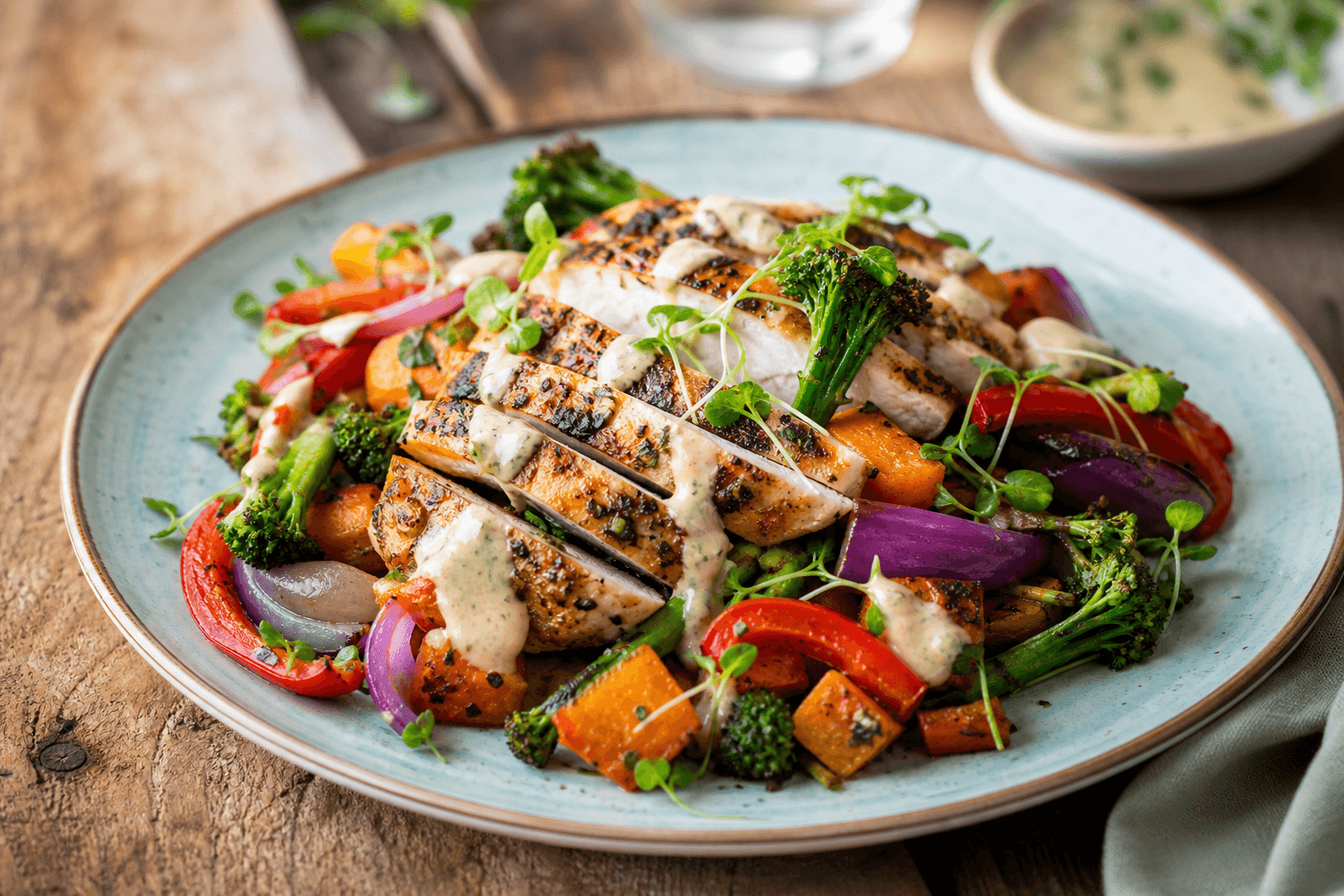
Mine menu guides for ideas, not copy-and-paste dishes
Large foodservice suppliers often publish recipe ideas for schools, hospitals, care settings or high-volume kitchens. Even if those sectors are not your market, the principles can help:
- Batch-friendly components such as sauces, grains, slaws and marinades
- Short cook times for busy lunch services and event rushes
- Clear allergen thinking built into menu planning
- Portion control that makes food cost easier to manage
Before adding anything to your menu, test it in your own setup. Ask: can it be cooked safely in your unit, held well, served quickly, and still taste like your brand?
Build a “fast service” test menu this week
Pick one existing dish and create a quicker version without lowering quality. Focus on the slowest part of service: frying time, assembly, garnish, payment flow or customer explanation.
Try this simple test:
- Time the dish from order to handover
- Identify one step you can prep earlier
- Reduce unnecessary garnish or packaging steps
- Check the finished dish still looks generous
- Re-cost the portion after any ingredient change
Small changes can make a big difference during a rush. A sauce in a squeeze bottle, pre-portioned toppings or a simpler garnish can protect both speed and consistency.
Use product ranges to simplify stock, not expand it endlessly
A wide supplier range can tempt you into adding too many ingredients. For a mobile kitchen, fewer well-used items are usually safer and more profitable.
Look for ingredients that can work across multiple dishes:
- A base sauce that becomes a dip, glaze or marinade
- One pickle or slaw that suits several proteins
- A grain, flatbread or bun that fits more than one menu item
- A garnish that adds colour without adding prep stress
This reduces waste, saves storage space and makes ordering easier. It also helps new staff learn the menu faster.
Treat training resources as a prompt for proper compliance
Supplier learning materials can be helpful, but your legal duties still sit with you as the food business operator. Use public guidance to check your basics, especially around hygiene, allergens and documentation.
Useful starting points include:
- FSA allergen guidance for food businesses
- FSA Safer food, better business
- gov.uk guidance on managing business waste
Make sure your team understands your actual menu, not just generic training examples. Allergen information should match your ingredients, prep methods and cross-contamination controls.
Ask better questions when speaking to suppliers
A supplier can help with availability, substitutions and product specs, but you should stay in control of menu decisions. When discussing ingredients, ask practical questions:
- What is the pack size and shelf life after opening?
- Can the item be cooked from frozen or does it need thawing?
- What allergens are present, including “may contain” risks?
- Is the product reliable year-round?
- What happens if it is out of stock before a major event?
Keep written records of key product information and review them when ingredients change.
Turn trend reports into street-food action
Food trend updates can be useful, but not every trend belongs on your board. Filter ideas through your customers, pitch size and cooking style.
A good trend-led special should be:
- Easy to explain in one sentence
- Possible with your existing equipment
- Profitable at your normal portion size
- Distinct from your core menu
- Quick enough for peak service
Run it as a limited special first. If it sells, cost it properly and decide whether it deserves a permanent place.
Make sustainability practical
Sustainability works best when it also improves operations. Start with actions you can measure:
- Use trim in sauces, stocks or staff meals where safe
- Plan specials around ingredients that need using
- Avoid packaging that slows service or leaks
- Order smaller amounts more often if storage is tight
- Track what gets thrown away at the end of each shift
Good street food is about flavour, rhythm and resourcefulness. Use wholesaler resources as a toolkit, then adapt every idea to your own van, trailer, gazebo or kitchen.