
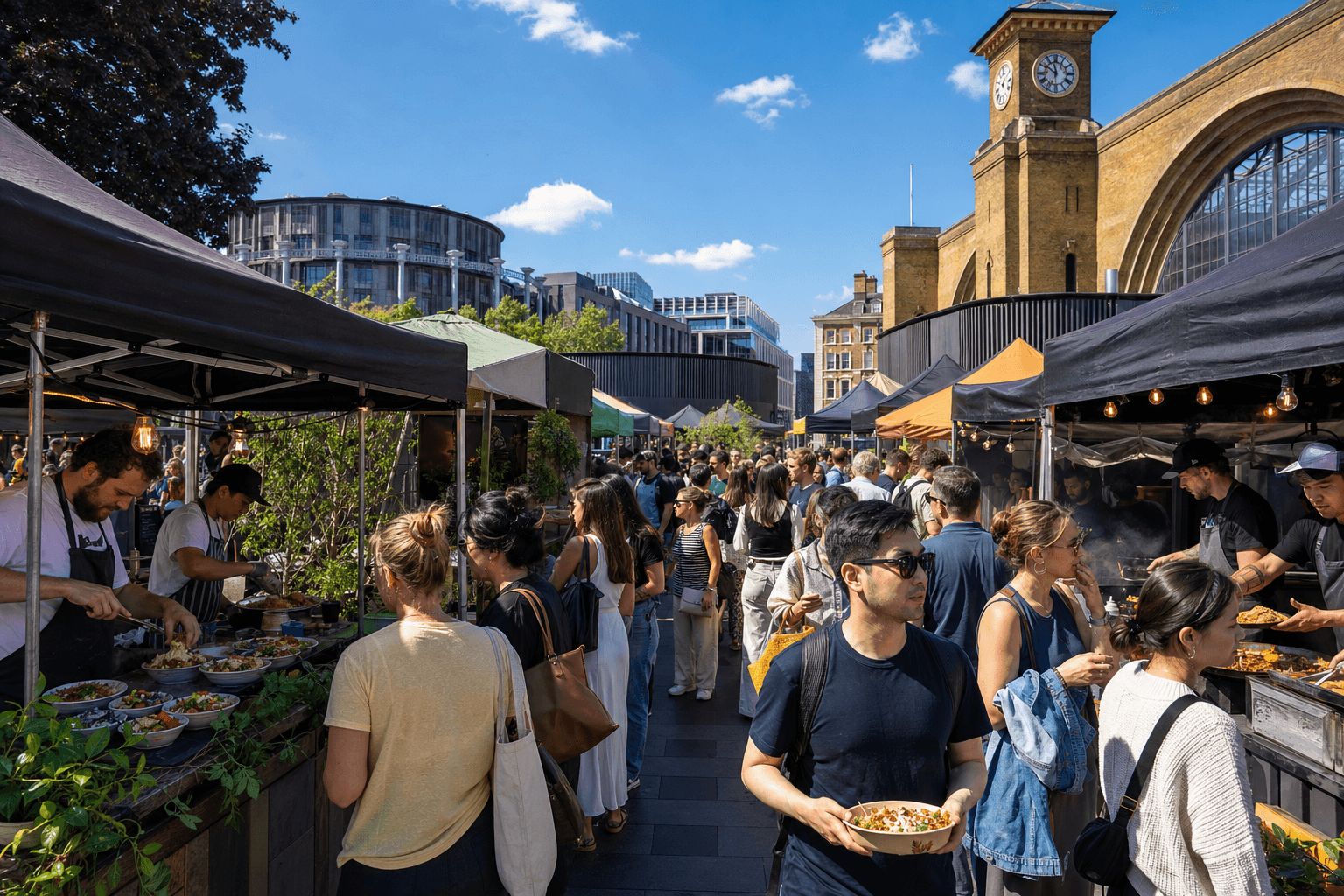
Assess the pitch before you apply
Look beyond headline footfall. A strong pitch should bring together the right customers, enough dwell time and practical operating conditions.
When comparing opportunities, ask:
- Who is the main customer: office workers, residents, tourists, students, families or late-night crowds?
- What is the trading window: breakfast, lunch, after-work, evening or weekend?
- How many similar cuisines are usually present?
- Is there enough queuing space without blocking walkways?
- What facilities are provided: power, water, waste disposal, storage, lighting and security?
- What are the pitch fees, commission terms, deposit rules and cancellation policy?
- Are traders rotated, and if so, how often?
A weekday lunch pitch may reward fast service and compact menus. A weekend neighbourhood market may suit a broader menu, family portions, meal deals and products customers can take home.
Match your menu to the trading window
Your best festival menu may not work for a two-hour lunch rush. For short, high-pressure sessions, prioritise dishes that are quick to assemble, easy to hold safely and simple for customers to understand.
Consider:
- One clear hero dish with two or three variations
- A vegetarian or vegan option that is not an afterthought
- A small number of sides or add-ons
- Prepped components that reduce service-time bottlenecks
- Clear allergen information at the point of sale
- Packaging that travels well for office or takeaway customers
Track what sells by time of day. If your high-margin dish slows the queue, it may cost you more in missed orders than it earns per plate.
Plan for trader rotation and competition
Rotating markets can be useful because they introduce you to new customers, but they also make consistency harder. Keep notes on each pitch so you can build a realistic view over time.
Record:
- Weather, date and trading hours
- Menu sold and prices charged
- Number of portions prepared and sold
- Queue length at peak times
- Nearby cuisines and price points
- Waste, sell-outs and customer feedback
- Total takings after fees and staffing
Competition is not always bad. A strong mix of traders can attract more visitors and create a better atmosphere. The key is to know where your offer fits: are you the fast lunch option, the indulgent treat, the premium specialist, or the reliable crowd-pleaser?
Check compliance before booking
Most organisers will expect evidence that your business is properly set up. Requirements vary, but you should be ready with:
- Food business registration with your local council
- A current food hygiene rating or inspection record where applicable
- Public liability insurance
- Employer’s liability insurance if you have staff
- Gas and electrical safety certificates where relevant
- Risk assessments and fire safety procedures
- Allergen information and safe food handling processes
You can review official guidance through the Food Standards Agency and register a food business through gov.uk. Trade bodies such as NCASS also provide operator-focused guidance.
Build relationships without relying on one route
Do not let one market, organiser or trading pattern become your whole business. A resilient mobile food operation usually has a mix of income sources, such as weekday lunch pitches, private catering, community events, office pop-ups and seasonal trading.
Stay professional with organisers:
- Reply quickly to booking requests
- Provide documents in the requested format
- Arrive on time and leave the pitch clean
- Be honest about power needs and setup size
- Report issues early rather than during service
- Share useful feedback after trading
Good operators get remembered for reliability as much as food quality.
Action plan for this week
- Review your last three trading days and identify your fastest, highest-margin dishes.
- Create a one-page pitch pack with menu, photos, setup dimensions, power needs and compliance documents.
- Shortlist three types of pitch that suit your food and service speed.
- Calculate your break-even point for each one, including fees, staff, travel, prep and waste.
- Update your allergen information and make sure your team can explain it clearly.
The best street-food pitches are not just the busiest. They are the ones where your food, setup and service style can perform consistently, profitably and safely.