
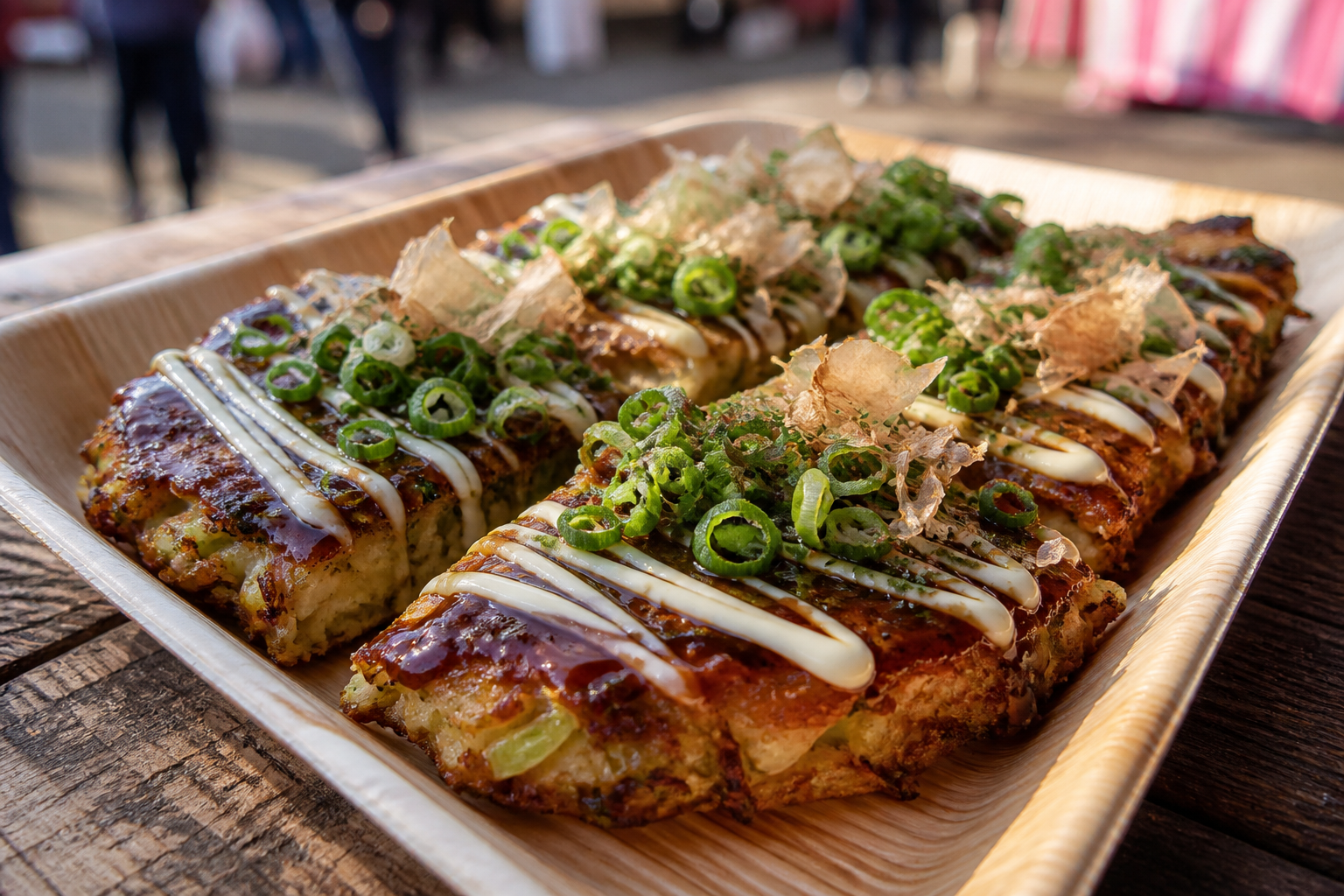
This is an operator-friendly adaptation rather than a strict regional recipe. Think crisp-edged cabbage pancake, savoury sauce, mayo and a few eye-catching toppings. It works as a £6–£7 handheld meal, especially when customers want something warmer and more substantial than another loaded chip box.
Yield and service plan
Makes: 12 wedges, or 4 portions of 3 wedges
Best equipment: flat-top griddle or large non-stick pan, tray, spatula
Service time: around 3 minutes per portion from chilled pre-cooked wedges
Serve three wedges in a cardboard tray or shallow food box. Add sauce in a zigzag, not a swimming pool: too much turns the base soggy and pushes your food cost up.
Ingredients
Okonomiyaki base
- 600g white cabbage, finely shredded
- 180g plain flour
- 4 medium eggs
- 180ml cold water
- 1 tsp baking powder
- 2 tsp light soy sauce
- 1 tsp toasted sesame oil, optional
- 3 spring onions, finely sliced
- 40g pickled ginger, chopped
- 2 tbsp neutral cooking oil
- Black pepper
To finish
- 150g okonomiyaki sauce, or a 50:50 mix of brown sauce and ketchup loosened with a splash of water
- 150g Japanese-style mayonnaise
- 2 spring onions, finely sliced
- 2 tbsp toasted sesame seeds
- 2 nori sheets, cut into fine strips
- Bonito flakes, optional and unsuitable for vegetarian service
For a meatier version, add 400g cooked, finely sliced pork belly or smoked bacon to the batter. Price it as a separate special rather than quietly absorbing the cost.
Method
- Make the batter. Whisk the flour, eggs, water, baking powder, soy sauce, sesame oil and pepper until smooth. Fold in the cabbage, spring onion and pickled ginger. Do not overmix; a loose, cabbage-heavy mixture gives you a better margin and a lighter wedge.
- Cook the slab. Heat a well-oiled 30cm pan or section of griddle over medium heat. Spread the mixture into an even round, roughly 2–3cm thick. Cook for 6–8 minutes until the underside is deeply golden and the centre is beginning to set.
- Turn carefully. Use two wide spatulas, or slide the pancake onto a tray and flip it back onto the griddle. Cook for another 5–7 minutes. The centre should be fully set, with no wet eggy batter.
- Cut and portion. Rest for 3–4 minutes, then cut into 12 wedges. For clean portions, use a lightly oiled bench scraper or sharp knife.
- Finish to order. Reheat three wedges on the griddle until hot through and crisp at the edges. Drizzle with okonomiyaki sauce and mayo, then add spring onion, sesame and nori. Add bonito only where the customer has chosen a non-vegetarian version.
Batch prep and holding
Cook slabs in batches during the quiet period, then cool them quickly in shallow trays. Keep chilled and covered, following your food-safety plan and local requirements. Do not stack warm wedges tightly; trapped steam is the enemy of crisp edges.
At service, reheat only what you expect to sell in the next short window. Keep hot food at 63°C or above if holding, and check the centre reaches a safe reheating temperature according to your documented procedure. Never leave cooked wedges lounging at room temperature between rushes.
Keep sauce bottles cold where required, label the mayo clearly, and flag egg, gluten, soya and sesame allergens. Bonito adds fish.
Rough costing and margin
Using typical trade-pack assumptions, one 12-wedge batch might cost approximately:
- Cabbage, batter and eggs: £2.50–£3.00
- Sauces and toppings: £1.50–£2.00
- Oil, garnish and packaging: £0.60–£0.80
That puts four portions at roughly £1.15–£1.45 each, before labour, pitch fees and VAT. At a £6.50 selling price, the ingredient-and-packaging gross margin is approximately 78–82%, but check it against your own supplier invoices.
Two useful moves this week: test whether three wedges feel filling enough in your actual serving box, and pre-portion the toppings before the next busy booking. The recipe is quick; the garnish bottleneck is where the queue usually starts.