
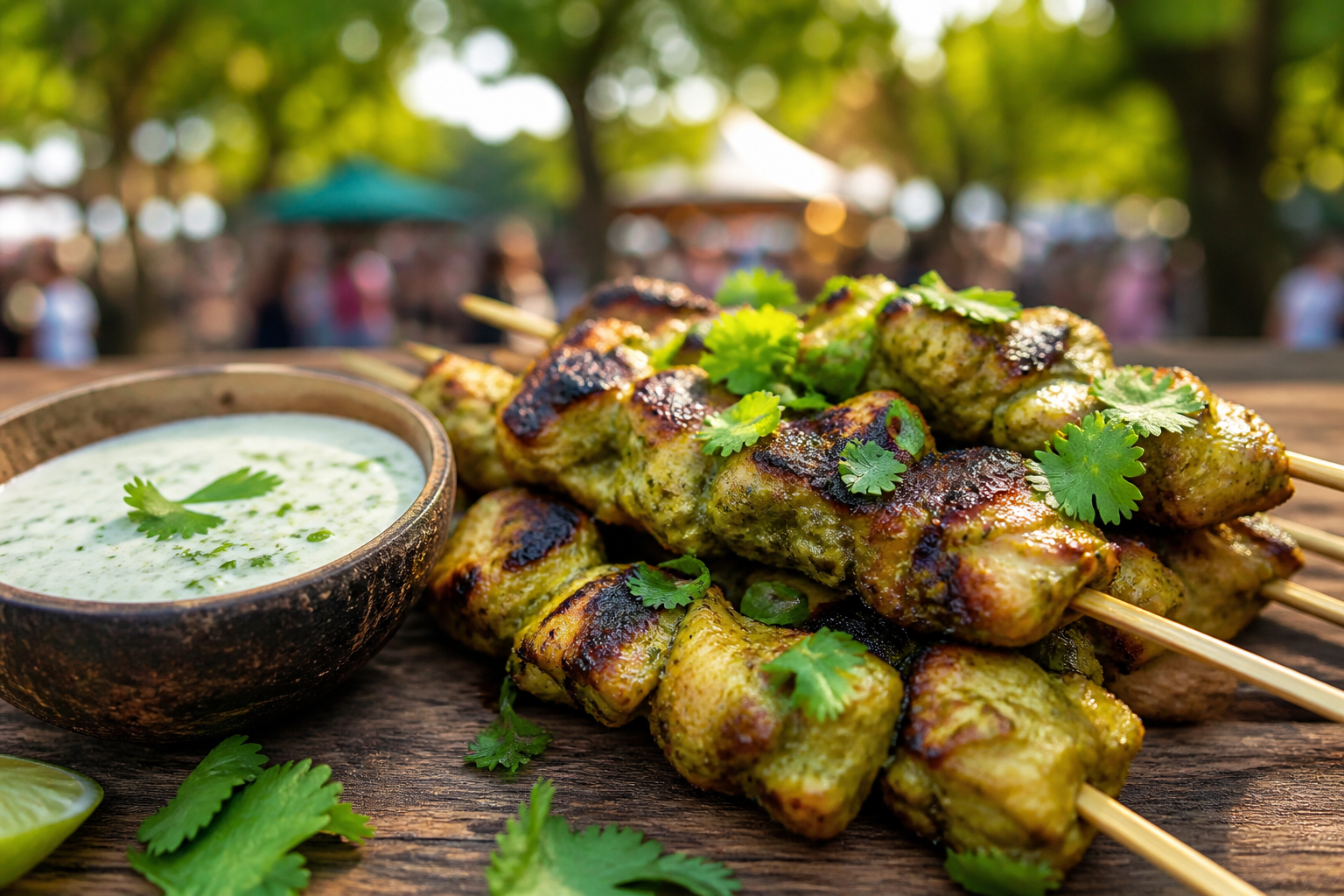
These Thai green chicken skewers tick those boxes. Prep the chicken ahead, grill in a tight service rhythm and hand over two skewers with a sharp coconut-lime dip. They also work nicely during the school holidays, when families want something more interesting than another burger but still need food they can eat while walking.
Batch recipe: 30 portions
Allow two skewers per portion, with roughly 120g raw chicken per serving.
Ingredients
Chicken skewers
- 3.6kg boneless, skinless chicken breast, cut into 3cm pieces
- 500g Thai green curry paste
- 800ml coconut milk
- 180ml light soy sauce
- 100ml fish sauce
- 180ml lime juice
- 150g soft brown sugar
- 6 red peppers, cut into chunky squares
- 6 red onions, cut into chunky wedges
- 60 bamboo skewers, soaked before use
Metal skewers are quicker and less wasteful if your setup allows them.
Coconut-lime dipping sauce
- 1.5 litres coconut milk
- 250ml lime juice
- 120g soft brown sugar
- 80ml fish sauce
- 150g Thai green curry paste
- Optional: chopped coriander, sliced spring onion or fresh chilli for garnish
The marinade follows the useful flavour base of green curry paste, coconut milk, soy, fish sauce, lime and sugar described in this Thai chicken skewer recipe. Check your curry paste: brands vary wildly in heat and salt, so taste the marinade before adding the chicken.
Method
- Mix the marinade. Whisk the curry paste, coconut milk, soy sauce, fish sauce, lime juice and sugar in a food-safe tub.
- Add the chicken. Coat thoroughly, cover and refrigerate. Thirty minutes will work; a few hours gives a fuller flavour. Overnight is practical for a next-day pitch, provided it stays properly chilled.
- Make the sauce. Whisk the coconut milk, lime juice, sugar, fish sauce and curry paste. Chill in labelled, lidded containers. Add herbs or chilli shortly before service so they stay fresh.
- Skewer the batch. Thread chicken, pepper and onion onto the skewers. Keep the pieces fairly even. One oversized chunk can leave you waiting for the middle while the edges burn.
- Grill to order. Over a medium-high grill, cook for around 4–5 minutes per side, as BBC Good Food’s version suggests. Turn until lightly charred and cook chicken through; use a clean probe and follow your food-safety procedure rather than trusting colour alone.
- Serve. Plate or box two skewers with 50ml coconut-lime sauce. Add a wedge of lime if your portion cost allows it.
Batch-prep and holding notes
- Keep raw chicken at 5°C or below during transport and prep, separated from ready-to-eat garnishes and sauce.
- Make a festival-sized batch, but load the grill in smaller waves. A full tray of skewers sitting around is not a production plan; it is tomorrow’s food-waste report.
- Cooked skewers should be served promptly or held hot in line with your documented food-safety controls. Do not rely on a lukewarm bain-marie.
- Keep dipping sauce chilled and replenish in small service containers. Coconut milk does not become festival-safe merely because it is wearing a nice garnish.
- Use separate tongs for raw and cooked chicken, and wash or replace marinade-contact utensils.
- For weddings and mixed crowds, put fish and soya allergens clearly on the menu. Check the curry paste label too; formulations differ.
Rough costing and margin
Illustrative example only, using your own supplier prices before setting a selling price:
- Chicken: £25–£32
- Marinade ingredients: £14–£20
- Sauce: £8–£12
- Vegetables, skewers, lime and garnish: £12–£18
- Packaging: around £9–£15
That puts 30 portions at roughly £68–£97 total, or £2.25–£3.25 per portion, before labour, fuel, pitch fees, VAT and wastage. At a £9 selling price, food and packaging would represent roughly 25–36% on those assumptions. Price higher for premium wedding service, larger portions or tableware.
Your two useful jobs this week: test the curry paste heat level with one full batch, and time how many skewers your grill can turn out in a 15-minute rush. That tells you whether this special will make money—or simply make smoke.