
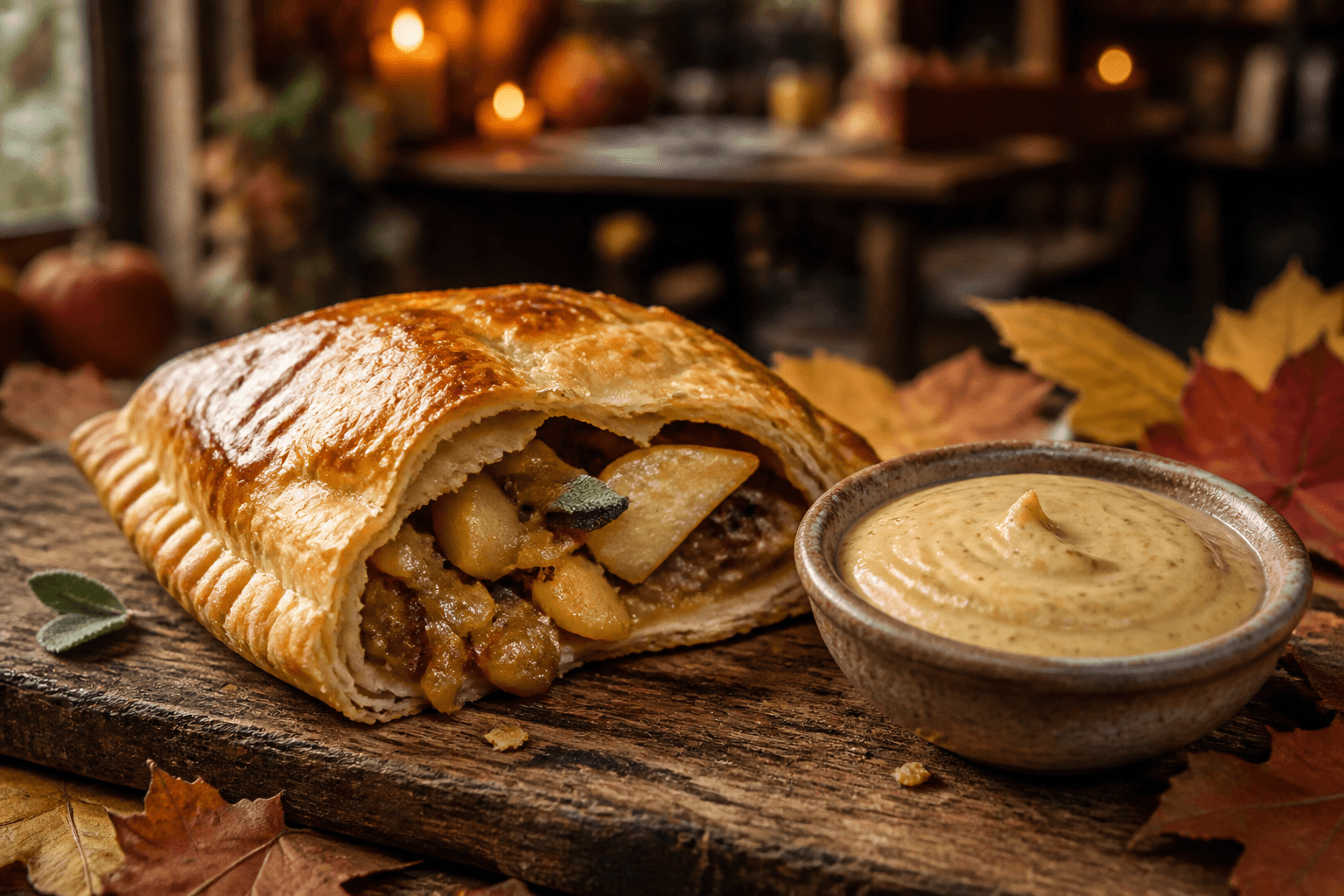
The winning flavour direction for October is roasted onion, apple, mustard and sage. It tastes like autumn without requiring a kitchen the size of a railway carriage. Keep the base dairy-free if possible, then offer cheese or creamy finishes only where needed.
Why dunkable food works on a mobile menu
Dunking makes familiar food feel more fun and more premium. It also solves a practical autumn problem: customers want something hot, portable and substantial, but they do not necessarily want a full meal in a cardboard tray.
A sauce cup gives you:
- A clear add-on opportunity
- Better portion control than pouring sauce over the food
- A way to make simple ingredients feel more distinctive
- Less risk of soggy handhelds during busy service
- One flavour system that can cross several menu items
The key is to make the sauce part of the product, not an afterthought. Name it, portion it and make it visible.
The sauce system: apple, onion, mustard and sage
Build a thick, glossy sauce from roasted onion, apple, stock, mustard, sage and black pepper. A little acidity keeps it from tasting like pudding, while the mustard gives it enough edge to work with fried food.
Keep the base consistent, then adjust small batches if you want variety:
- Classic: extra sage and black pepper
- Hot: chilli or smoked paprika
- Creamy: finish with crème fraîche or a dairy-free alternative
Do not create three completely separate sauces. That is how a clever seasonal idea turns into six open containers and a mysterious amount of waste.
Use a measured portion in a lidded pot or cup. If customers can see the sauce, they understand what makes the item special — and you can price the add-on properly.
Three handhelds with different cost profiles
1. Crispy potato, cheddar and sage croquettes
Potato gives you the margin foundation. Add a modest amount of mature cheddar, sage and perhaps a little spring onion, then crumb and fry or bake.
Serve three or four with a pot of the sauce. They are filling, vegetarian and easy to batch, although you will need to manage holding time carefully so the coating stays crisp.
Menu wording:
Autumn Dunkers — crisp potato and cheddar bites with apple-mustard sauce.
2. Chicken thigh goujons
Chicken thigh is generally more forgiving than breast during service and brings a richer flavour to the autumn profile. Marinate, crumb and portion consistently. The sauce cuts through the fried coating and makes the dish feel more complete than “chicken strips” ever will.
Keep the portion tight. The sauce, seasoning and presentation should do some of the selling work instead of adding another expensive protein piece.
Menu wording:
Sage Chicken Dunkers — crispy thigh goujons with roasted onion and apple sauce.
3. Mushroom and white bean fritters
A mixture of mushrooms, white beans, breadcrumbs and herbs creates a hearty plant-based option without asking you to source a specialist meat substitute. Shape into small fritters or fingers so they share the same packaging and service rhythm as the other two.
Mark the allergens clearly. Breadcrumbs, mustard and any stock or seasoning blend need checking before this reaches the menu.
Menu wording:
Mushroom & Bean Dunkers — crisp savoury fritters with warm apple-mustard dip.
Make the numbers work before you print anything
Cost each item by finished portion, including crumb, oil, sauce, packaging and garnish. Then check whether all three can use the same:
- Sauce cup
- Tray or box
- Garnish
- Prep and fry station
- Menu photography
Offer a mixed trio as the premium option, but do not make it so generous that it quietly eats the margin from your individual portions. A “choose any two” box can also encourage a higher spend while letting customers avoid an item they do not fancy.
Put it live this week
Run a small test at your next service rather than launching a full autumn range. Watch which handheld sells first, how quickly the sauce runs out and whether customers ask for extra dip.
If one item lags, do not immediately bin the whole idea. Rename it, change the crumb or turn it into a limited batch. Seasonal menus should be nimble. The best autumn special is the one you can prep confidently, serve quickly and tweak before the weather changes its mind again.