
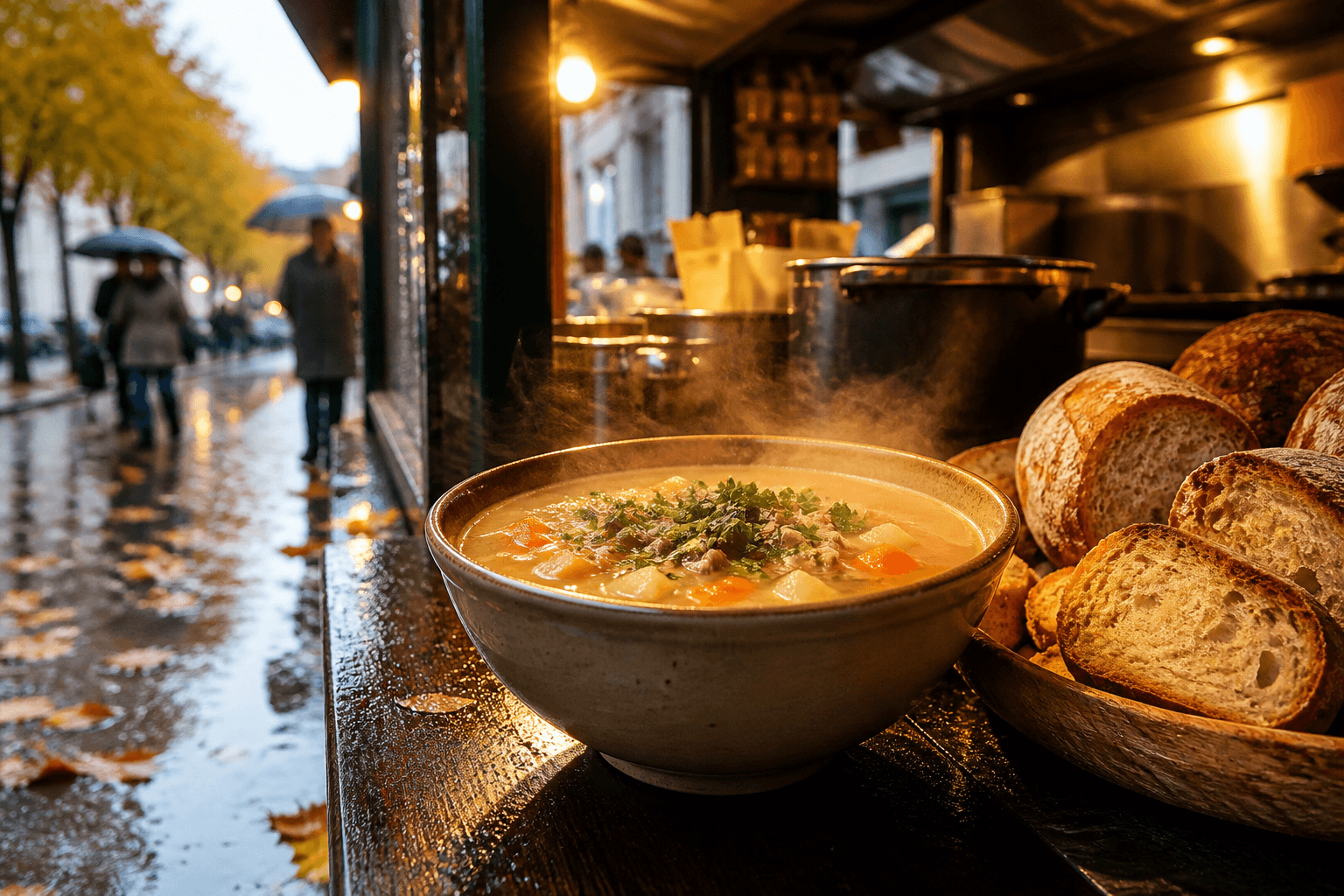
This week, walk your pitch from the customer’s point of view before service. If they cannot spot you, understand what you sell and see where to order within five seconds, you have a visibility problem—not a demand problem.
Build a three-layer visibility system
1. Be findable before customers arrive
Post a clear “open today” update two to three hours before service. Include:
- Exact location, with a recognisable landmark
- Opening and closing times
- One hero item or autumn special
- Whether you are serving takeaway, pre-orders or both
- A simple weather cue: “Hot food, covered queue, open from 4pm”
Do not make customers decode a video or search through old posts for your location. Put the practical information in the first line and repeat it in your story or status update shortly before opening.
If your pitch is weather-dependent, check the Met Office local forecast and warnings before committing to a promotion. A wet-weather message should be operational, not optimistic: tell people whether the queue is sheltered, whether seating is available and when the next batch will be ready.
2. Make the van visible from the approach
In darkness and rain, your normal branding works less hard. A clean, illuminated menu board can outperform another social post because it reaches people already nearby.
Prioritise:
- Warm, even lighting on the serving hatch and main sign
- Large, high-contrast prices that can be read from several metres away
- One clear message, such as “Hot loaded fries” or “Soup and toasties”
- A visible “ORDER HERE” marker and a separate “COLLECT HERE” marker
- No clutter around the hatch or menu
Avoid relying on small chalkboards. Dark, wet surfaces reduce legibility, and handwritten specials disappear under poor light. Use weather-resistant signs and secure all cables, stands and lighting so they do not create a trip risk or obstruct pedestrians. If you add equipment or signage outside the vehicle, check your site rules and local street-trading conditions; councils can set their own requirements for trading locations and equipment. The GOV.UK street trading guidance is a useful starting point.
Turn the queue into a confidence signal
A queue is marketing only when people can tell it is moving. In wet weather, uncertainty makes customers leave quickly.
Put the ordering point where it is obvious from the back of the queue. Display three pieces of information:
- “Order here”
- “Current wait: approximately __ minutes”
- “Collect here”
Update the wait time when service slows. If an item is sold out, cross it out immediately rather than explaining it repeatedly at the hatch. A short, accurate menu will usually sell better than a full menu that cannot be read or fulfilled quickly.
Have one person greet the queue when possible. A simple “We’re taking orders here—about a 10-minute wait” converts uncertainty into a decision. If you are working alone, make the same information visible on the board.
Give customers a reason to choose you tonight
Autumn demand responds well to warmth and immediacy, but avoid vague seasonal language. Sell the use case:
- “Dinner sorted on the way home”
- “Hot supper before the match”
- “Rainy-day special: available until sold out”
Choose one featured item and put it everywhere: the advance post, roadside board, menu panel and verbal recommendation. Limited availability can create urgency, but only if the item genuinely has a fixed quantity or service window.
Your action list for this week
- Photograph the pitch from the road at 4pm, then fix the first three things you cannot see.
- Create one reusable wet-weather post template with location, hours, hero item and queue information.
- Add separate order and collection signs before your next service.
- Track sales from 4–6pm against later service. If the window is weak, test the visibility changes before changing the menu.
The goal is not brighter branding for its own sake. It is fewer missed customers, faster decisions and a queue that looks open, organised and worth joining.