
Give each texture a job
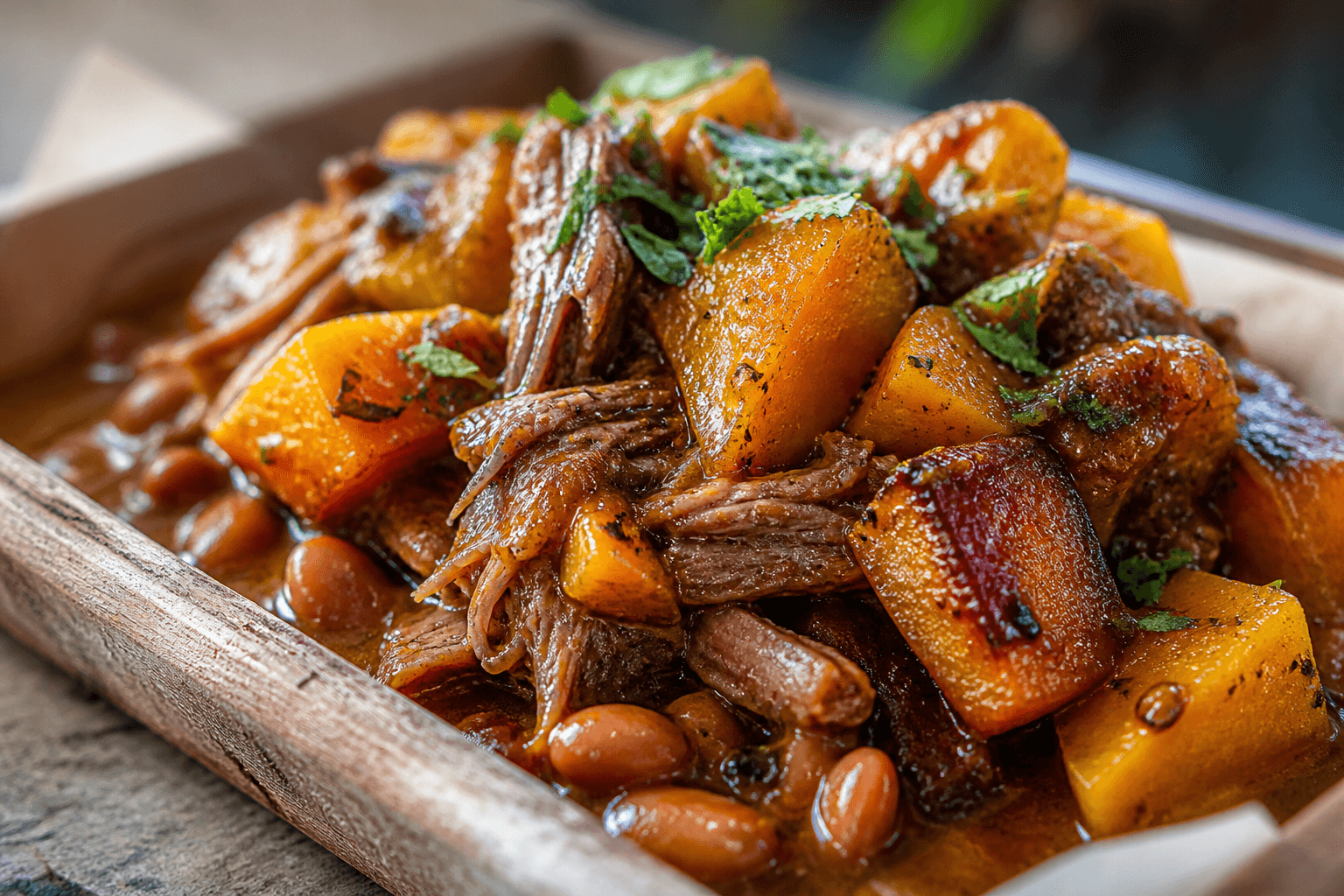
Autumn ingredients bring plenty of softness: roasted squash, slow-cooked meat, beans, mushrooms and rich gravies. Lovely stuff. Stack them together without contrast, though, and lunch can become a warm duvet with a fork.
A useful texture map gives a dish three distinct jobs:
- The anchor: something substantial to chew, such as browned mushrooms, shredded shoulder or beans that retain their shape.
- The comfort: a yielding element, such as mash, squash purée or a thick sauce.
- The interruption: something crisp, crunchy or sharply fresh that breaks up the richness.
Those are roles, not compulsory extra components. A well-roasted potato can provide both a crisp exterior and a soft centre. Properly browned cabbage can bring tender leaves and firmer edges.
Before adding a garnish, ask whether better cooking could deliver the contrast instead.
Build contrast through the portion
Take an autumn squash-and-bean bowl. Squash, beans and gravy may taste excellent, but their textures can converge.
A stronger version might use deeply roasted squash wedges, beans folded through a restrained sauce, and finely sliced cabbage dressed close to service. Toasted pumpkin seeds add a dry crunch.
The important move is distribution. Put a little cabbage through the middle as well as on top. Scatter seeds in two layers rather than one decorative summit. Keep some squash edges above the sauce.
Now the customer encounters contrast repeatedly, rather than spending it all in the first three forkfuls.
That principle works across formats:
- Loaded potatoes: leave some crisp potato exposed; spoon sauce into pockets rather than flooding the tray.
- Flatbreads: drain wet fillings and spread the crunchy element along the eating length.
- Braised-meat buns: use a slaw with some bite, but drain it well enough that the bottom bun does not become a sponge.
Treat moisture as an ingredient
Crunch is not simply something you add. It is something you protect.
Hot fillings release steam. Dressings draw moisture from cut vegetables. Sauces migrate into bread and crumb coatings. The dish changes between your hatch and the customer’s first sheltered place to eat.
For autumn trading, test the food inside its actual packaging. A vented pack may help a fried component retain crispness, but it can also lose heat faster. There is no universal winning box: test the food, pack and likely wait together.
Keep dry toppings covered and away from the steam rising off the hot line. Dress slaw in small service batches. Drain pickles before assembly. If sauce consistently defeats the crust, change where it goes—or offer it separately where that suits the dish and service flow.
More crunch will not fix a puddle.
Use seasonal ingredients for more than softness
Autumn produce has a wider repertoire than roasting everything until tender.
Thin raw apple can bring snap to a rich pork filling. Finely shredded celeriac offers a firmer bite in a dressed salad. Cabbage can be crisp, charred or gently braised, depending on the job.
Even one ingredient can supply contrast: mash part of your roast squash into the sauce and keep the rest in browned pieces. That builds variety without another prep container demanding space in an already crowded fridge.
Two moves to make this week
Run a last-bite test. Pack your biggest-selling autumn dish exactly as sold. Taste it immediately, then repeat after a realistic customer wait. Eat right down to the bottom. Note where crisp becomes leathery, bread turns wet or every mouthful starts feeling identical.
Change one placement before buying one ingredient. Move sauce beneath rather than over a crisp component, distribute the existing garnish, or dress smaller batches of slaw. Compare the result during service.
The aim is not maximum crunch. It is rhythm: soft, crisp, chewy, fresh—enough variation to make the last forkful feel as considered as the first.